The Guest Bedroom: How to Make a Spare Room Feel Like Somewhere Worth Staying
From an interior architect who thinks about what guests actually experience — not just what the room looks like in photographs
HOW TO STYLE YOUR GUEST BEDROOM IN THIS GUIDE:The real problem with most guest bedrooms
The bed — weight, proportion, and why hotel rooms get it right
The space above the bed
Light — the guest-specific challenge
The bedside table — a different brief than your own
Storage that actually works for a guest
The arrival moment
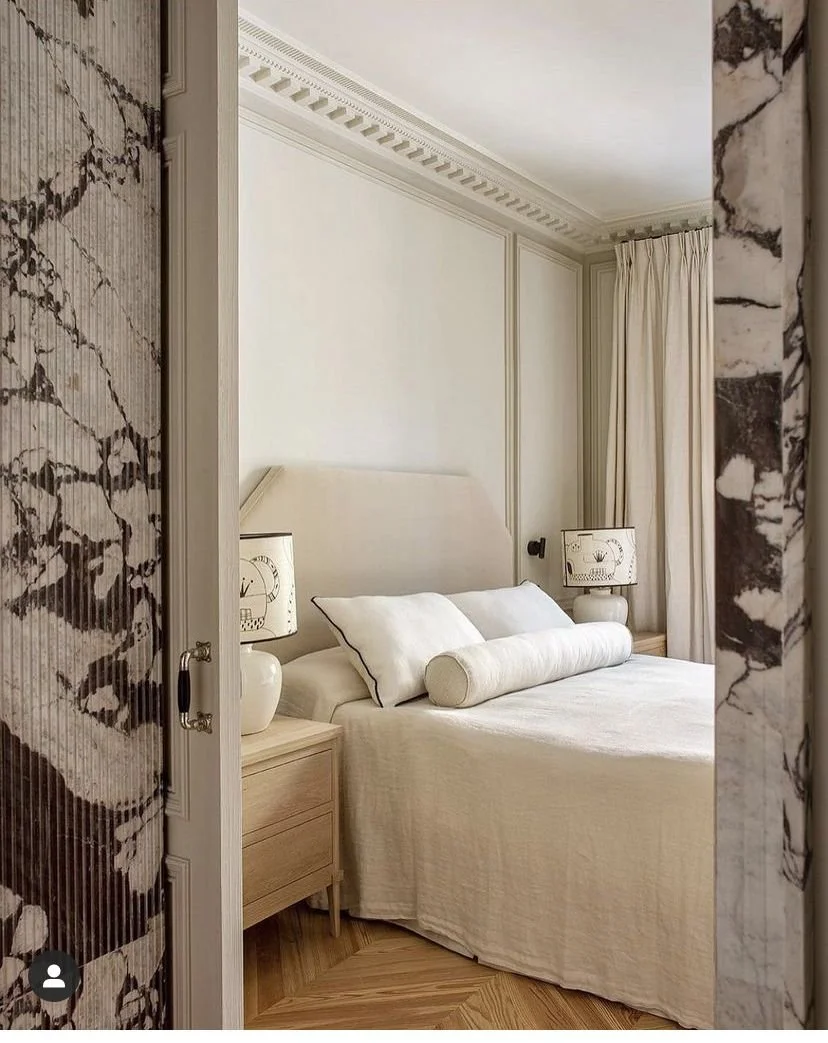
Most guest bedrooms are comfortable. That isn't the problem. The problem is that they feel borrowed — like the room is tolerating the guest rather than welcoming them. There's the bed from the old flat, the chair that used to be in the living room, the art that didn't make the cut elsewhere. Everything functional, nothing considered.
The guest bedroom has a particular design challenge that the rest of the house doesn't: it has to work for someone who doesn't know your home. They don't know which lamp switches on from where, or that the curtains need to be pulled before the roman blind or the light comes through at 6am, or that you need to turn the handle up slightly to lock the door. A guest bedroom has to be legible — everything they need, obvious and in reach, without them having to ask.
That's an architectural problem before it's a styling one. Here's how I approach it.
1. The real problem
The spare room tends to collect what the rest of the house doesn't know what to do with. A desk that seemed useful. Boxes from the last move. A rail of off-season coats. The room becomes a storage solution first and a bedroom second, and no amount of pretty cushions resolves that.
Before thinking about styling, take everything out that isn't a bedroom. Everything. The exercise equipment, the overflow wardrobe, the filing. What remains is the actual brief: a bed, a bedside table, somewhere to put things, somewhere to hang clothes. That's the starting inventory. Work from there.
Restraint in a guest bedroom reads as generosity. An empty room — spacious, uncluttered, with a well-made bed in it — feels like a gift. A crowded room, however tastefully decorated, feels like an imposition.
2. The bed — weight, proportion, and why hotel rooms get it right
The reason a well-made hotel bed looks the way it does isn't expensive linen — it's volume. There is weight and substance to it. Layers. A duvet with real loft, pillows that hold their shape, a folded blanket across the foot of the bed that gives the eye somewhere to rest.
For your own guest bed, the single most effective thing you can do is add layers. A flat, thin duvet with two pillows will always look temporary regardless of its thread count. Stack the pillows — two sleeping pillows, one or two European squares behind them. Consider a light blanket folded inside the duvet cover for extra warmth, since you won't know whether your guest runs hot or cold. The arrangement has mass. It reads as intentional.
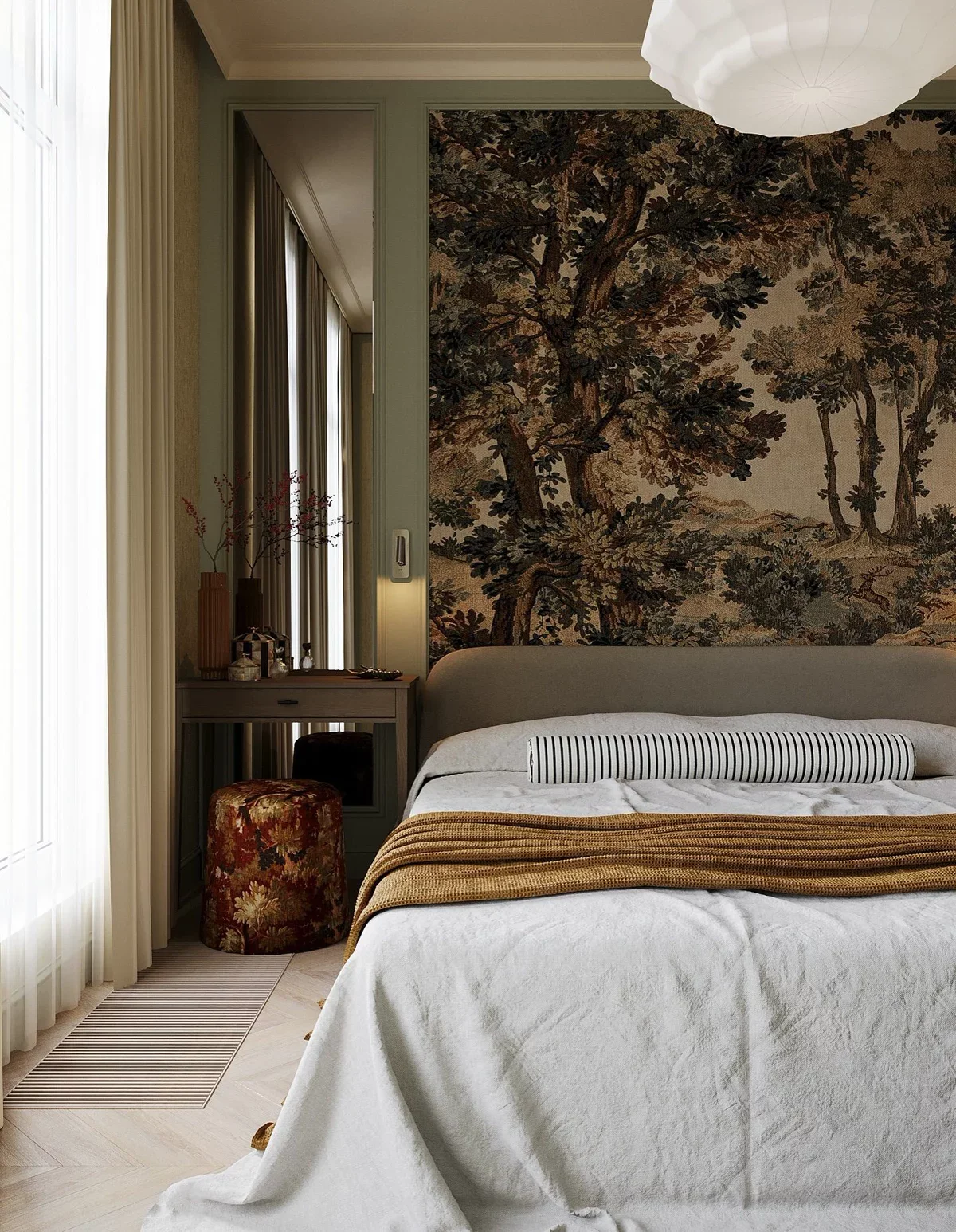
Proportion matters too. The bed should be the right size for the room — not crammed against a wall with no space either side, not floating in a space too large for it. Ideally, there should be enough room to walk around both sides. If the room is small, a bed frame with a lower profile opens up the ceiling visually. The headboard should feel tall enough to anchor the wall — there should be more wall above it than below, but it shouldn't compete with the ceiling. In a low-ceilinged room, a lower-profile frame and a modest headboard will always feel more resolved than one that crowds the space above it.
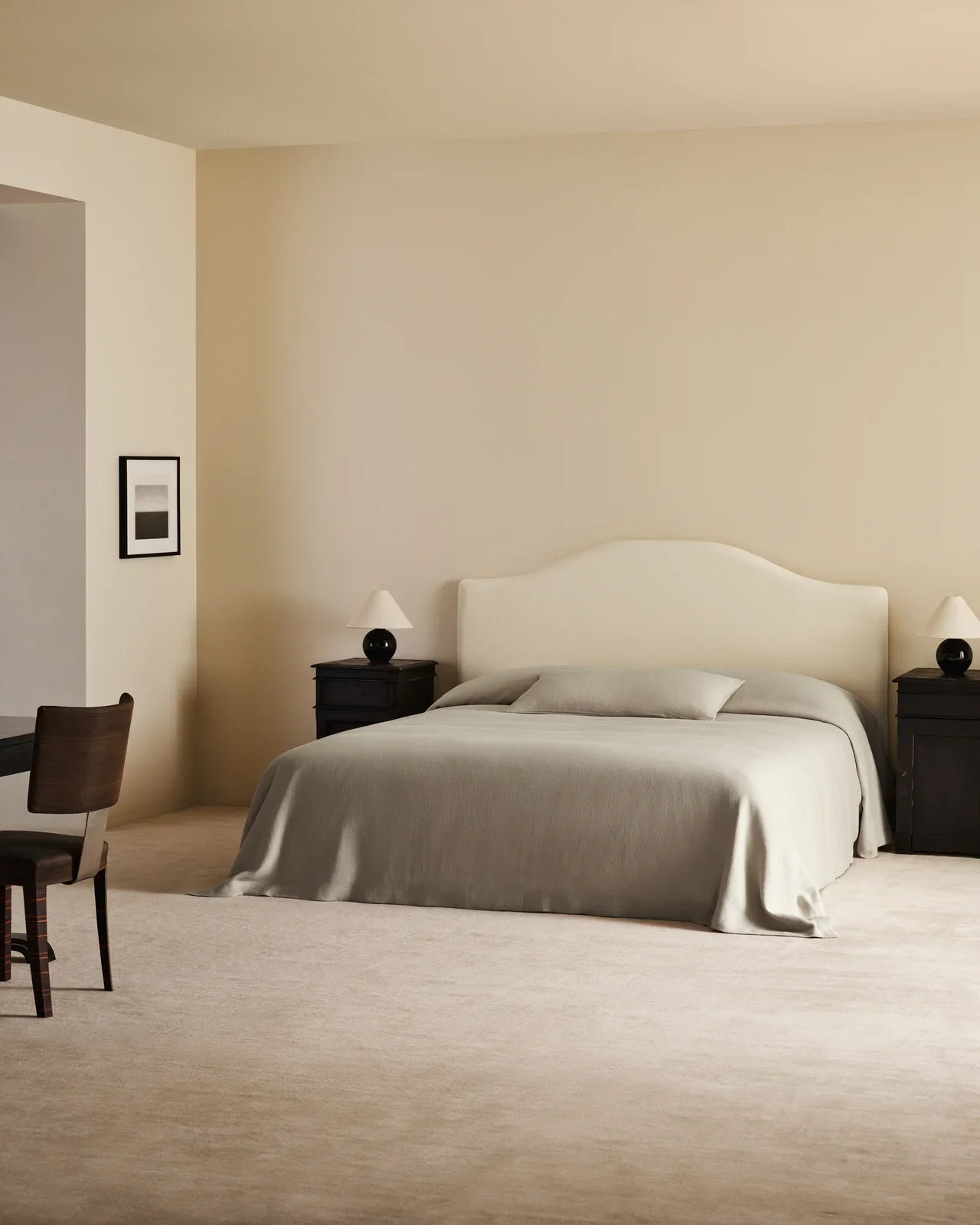
Studio Linen – Sand
NORDIC KNOTS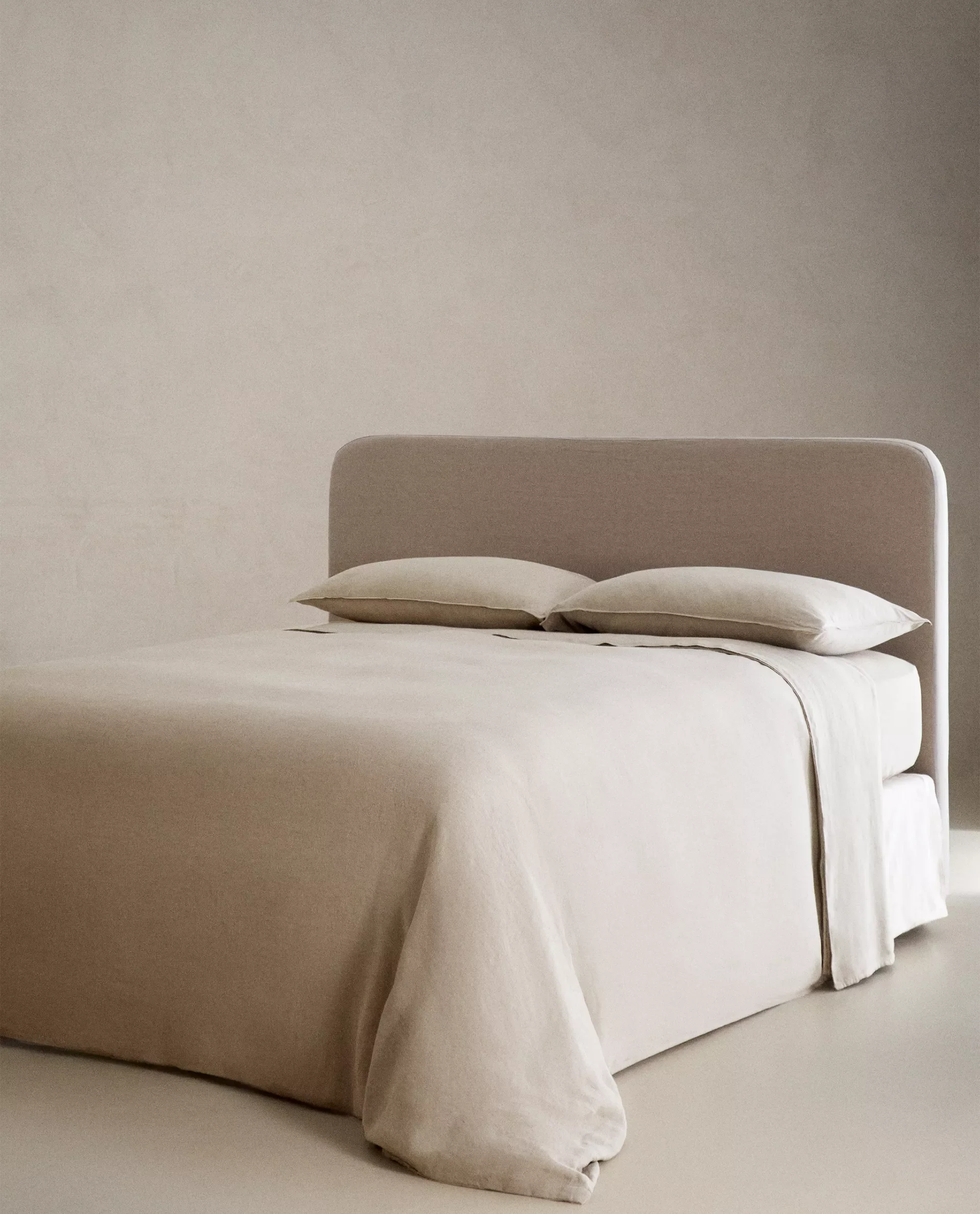
Linen Duvet cover
Zara HomeLinen Bedding
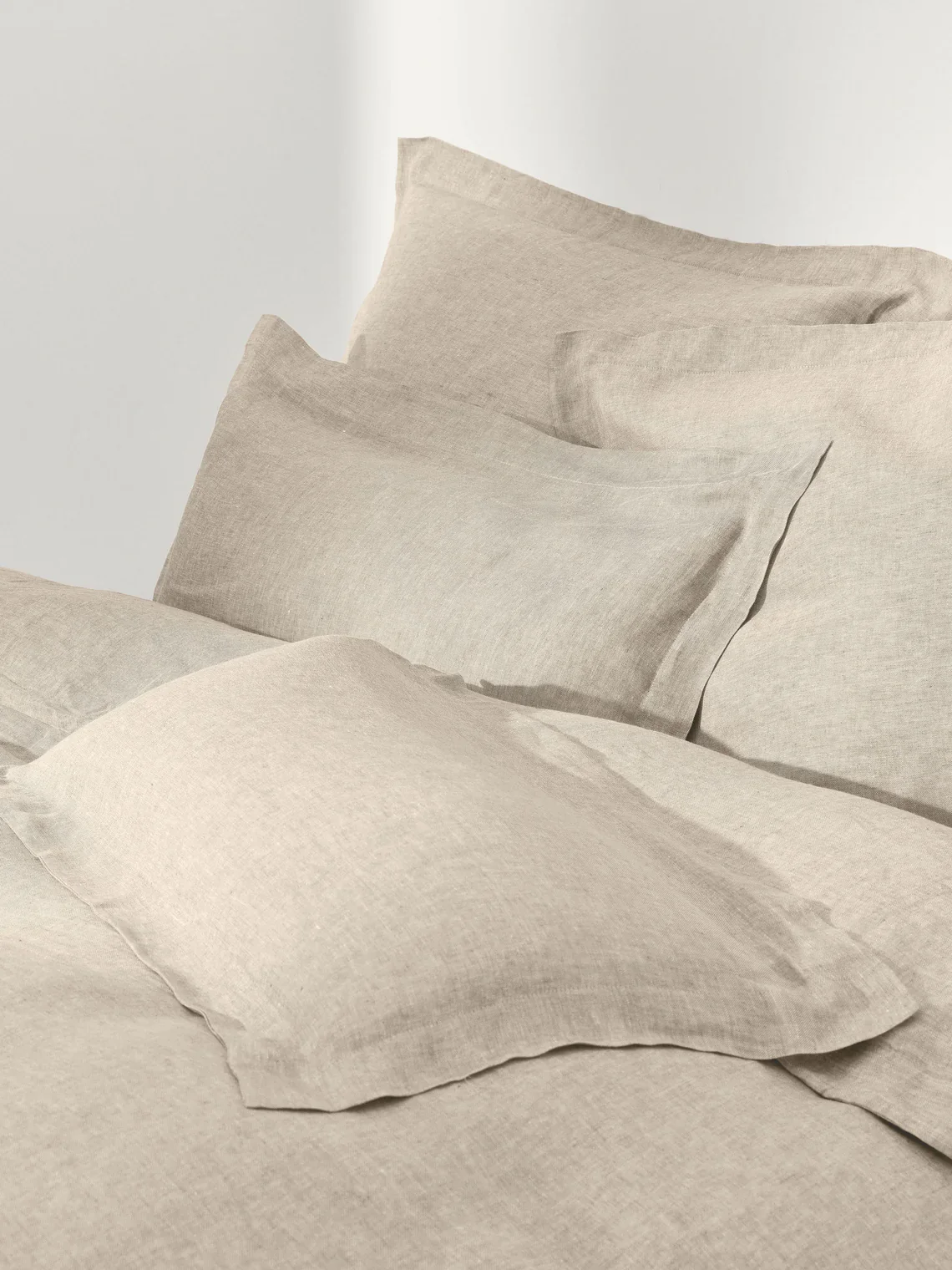
Oxford Linen Duvet Cover Linna
Westwing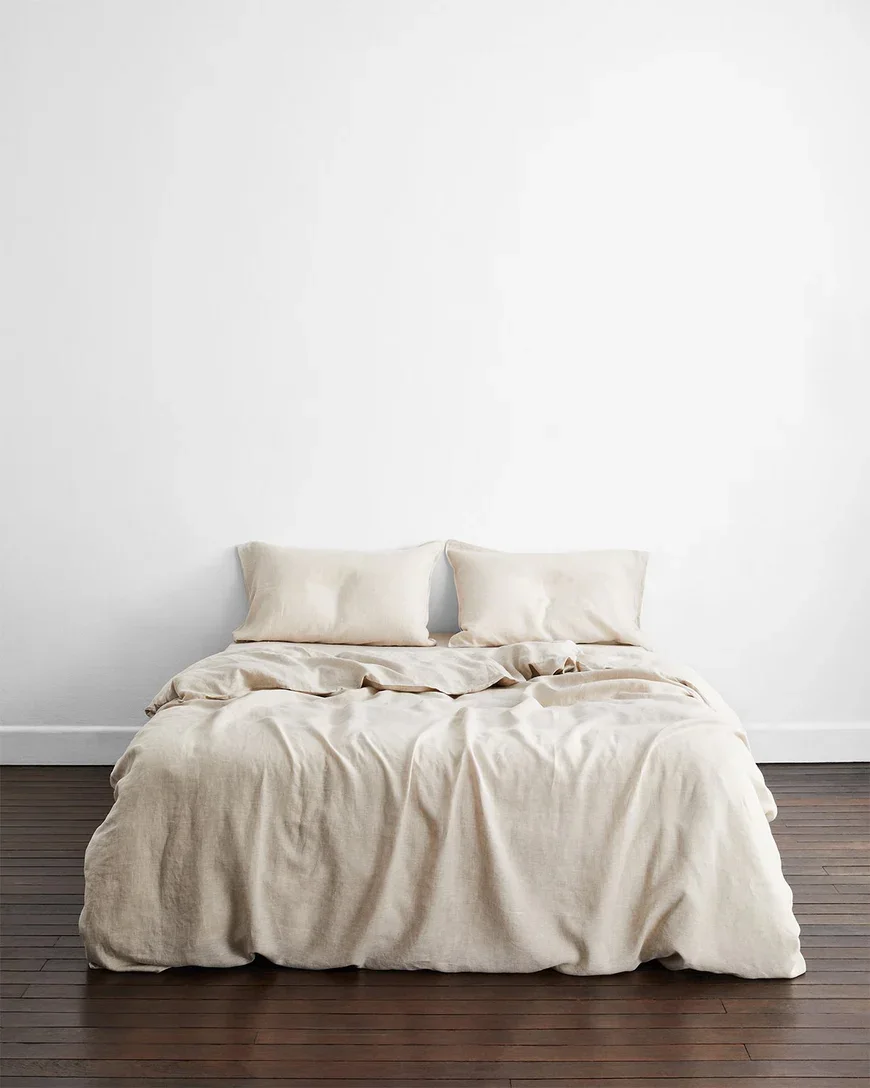
Oatmeal Bedding Set
Bed Threads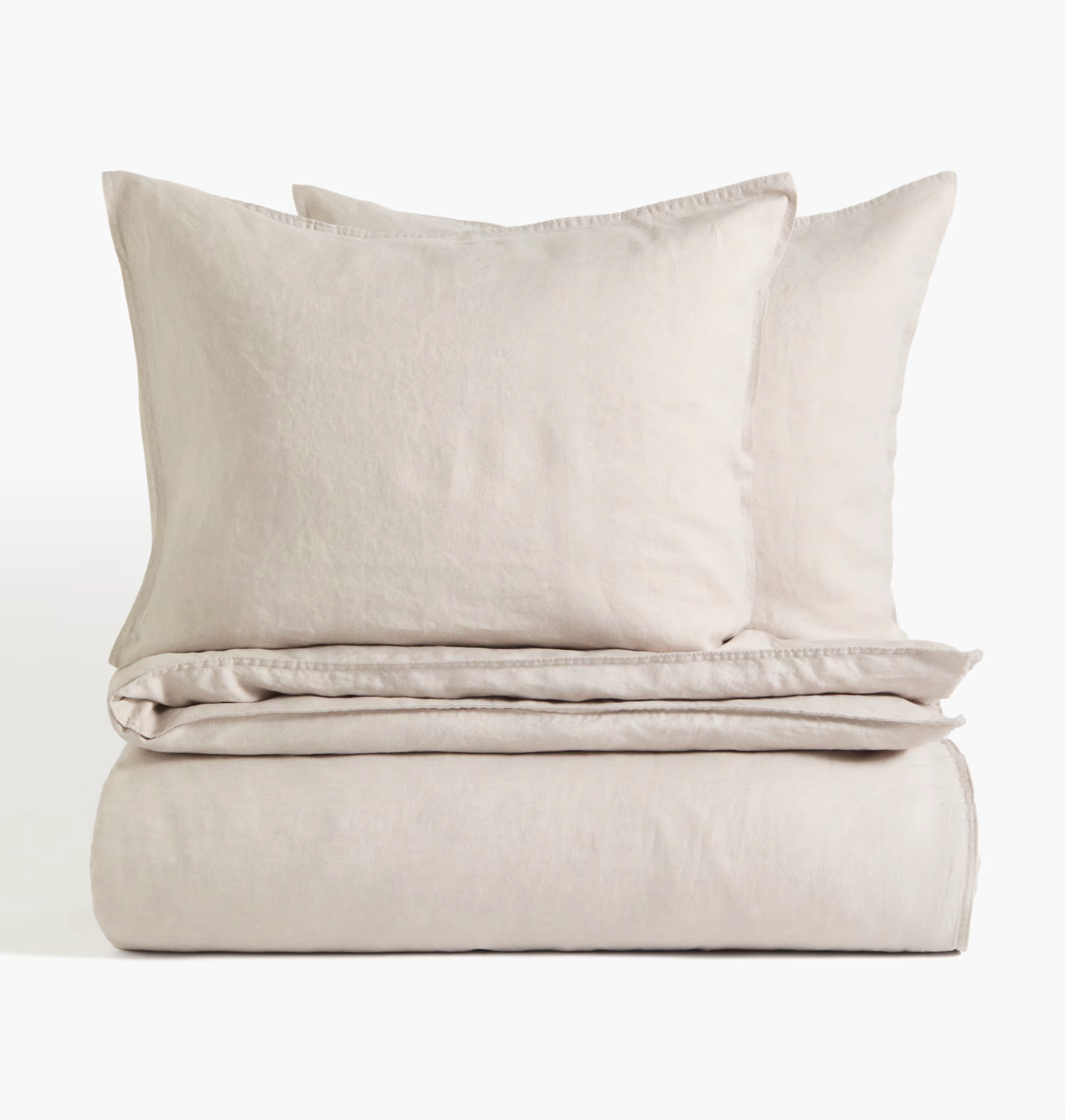
Duvet Cover Set
H&M Home3. The space above the bed
This is one of the most considered decisions in any bedroom, and it's worth thinking about before reaching for a piece of art.
The wall above the bed has a scale problem. Most rooms leave it completely empty, which reads as unfinished. Most attempts to fill it get the scale wrong — a single picture that's too small, floating in too much white space, doing nothing for the room.
What works: a single large piece of art that is genuinely wide enough to relate to the width of the bed. As a guide, the artwork or grouping should be roughly two-thirds the width of the bed frame — not wider than the headboard, but generous enough that it anchors the wall. Alternatively, a large-format mirror above the bed brings light and depth without committing to a specific piece. In a room without strong architectural features, it also makes the room feel taller.
If budget doesn't allow a large piece, three smaller prints in a considered horizontal grouping can work — but they need to be hung close enough together to read as one object, not scattered across the wall.
4. Light — the guest-specific challenge
This is where most guest bedrooms fail quietly. There's a ceiling light that's too bright, or a single bedside lamp that casts the room into shadow everywhere else, or light switches that require orientation to find in the dark.
A guest needs to be able to control the room's light without asking. That means at minimum: a bedside lamp that switches on and off from the bed, without getting up. If there's a ceiling light on a separate switch by the door, make sure both switches are clearly accessible. A small lamp on a low setting, left on when guests arrive, is a welcome. Arriving to a dark room and feeling for switches is not.
Warmth matters more in a guest bedroom than elsewhere. Cool daylight bulbs in a room you don't personally sleep in will feel clinical to someone trying to wind down. Use warm white throughout — 2700K is the number to look for — and if there's a way to add a second light source (a small lamp on a dresser, a wall light), it gives the room flexibility and softness.
5. The bedside table — a different brief than your own
Your own bedside table is personal. A guest's is a brief. What does someone need when they're staying somewhere unfamiliar?
A lamp they can reach from the bed. A glass of water — not a bottle, a glass, already filled, on a small tray or coaster. The Wi-Fi password, written down, not assumed. A charging point they can find without moving furniture. A small dish or tray for keys, rings, whatever they empty from their pockets.
That's it. The bedside table in a guest room should be generous in surface area and deliberately edited. Guests arrive with their own things — their phone, their book, their toiletries — and they need somewhere to put them. A cluttered bedside table is one more thing they have to navigate in a space they don't know yet.
6. Storage that actually works for a guest
The question is simple: where does a guest put their bag, their clothes, and their case? If the answer isn't immediately obvious when they walk in, the room isn't finished.
A luggage rack is one of the quieter luxuries in a guest room — it tells the guest their bag has a place, and it keeps it off the floor and off the bed. A few hangers in a wardrobe or on a hook on the back of the door. A drawer or shelf cleared of your things, left empty for them. Guests don't need much space; they need to know the space is theirs.
7. The arrival moment
Consider what a guest sees in the first five seconds. They open the door, they put down their bag, they take in the room. That moment — before they've tried the bed or found the bathroom — is what stays with them.
A well-made bed with layered bedding. Natural light, if possible, or a lamp already on. A clear surface near the door for a bag. A small detail that signals care — fresh towels folded at the end of the bed, a plant that's clearly alive and healthy, a candle on the dresser that's been chosen rather than placed.
None of these things are expensive. All of them take time and thought. The guest bedroom, more than any other room, is where the thought shows.