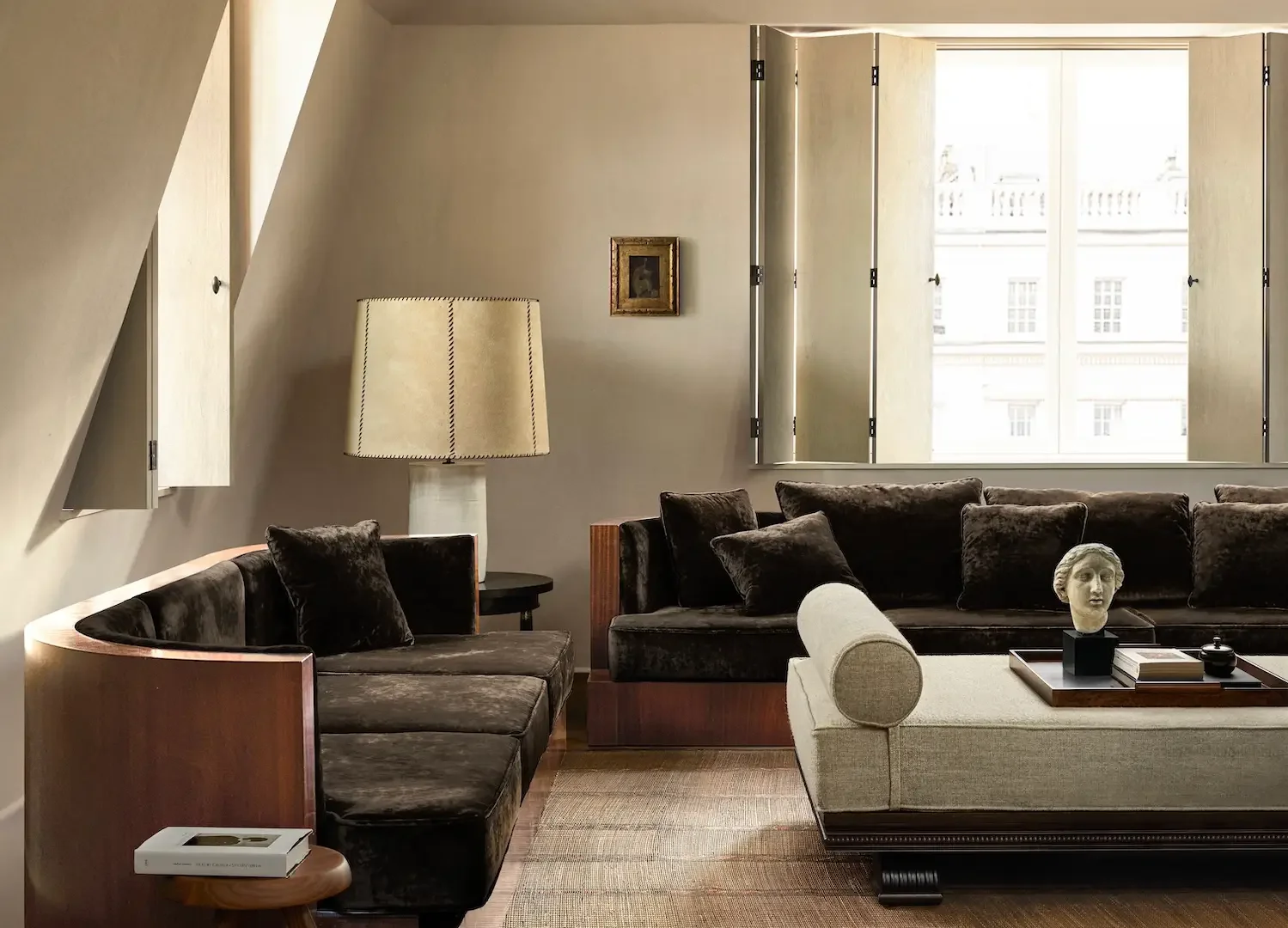
How to Choose a Sofa: The Decisions Most People Get Wrong
An interior architect on the most consequential purchase in a living room — and how to pair two sofas when one isn't enough
HOW TO CHOOSE SOFA IN THIS GUIDE:The decision before the shopping
Scale — getting the size right
Depth — the most overlooked specification
Construction — what's actually worth paying for
Fabric — how it reads and how it lives
How to pair two sofas in one room
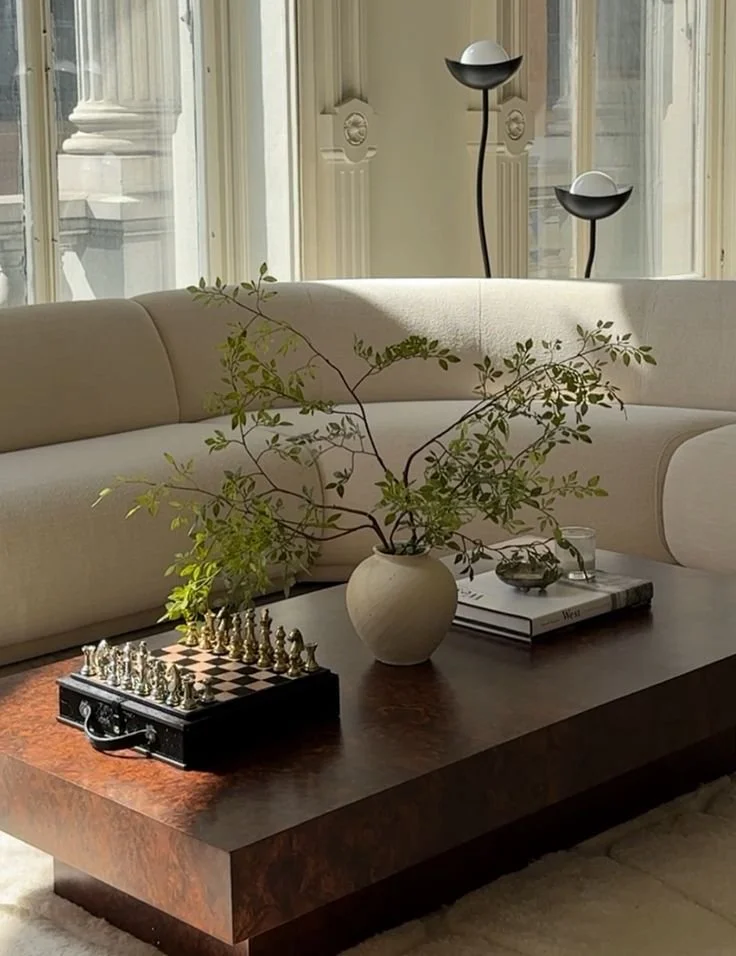
The sofa is the most consequential purchase in a living room. It determines the room's scale, its mood, its spatial logic. It's also a decision most people make based on how something looks in a showroom under flat lighting, after sitting in it for forty seconds. Then it arrives and either everything falls into place — or the room never quite works and nobody can say exactly why.
The problem is almost always one of the same things: wrong scale, wrong depth, wrong fabric for the way the room is actually used. None of these are difficult to get right if you know what to look for. Here's what I look at.
1. The decision before the shopping
Before dimensions or fabrics, there's a prior question: what does this sofa need to do?
A living room used primarily for conversation needs a different sofa from a room used primarily for films. Conversation rooms benefit from a shallower seat depth and a firmer back — you sit more upright, you face people, you stay engaged. Lounging rooms need depth and softness — you sink in, you lean back, the sofa holds you. Neither is wrong. But they're different pieces.
The configuration question matters too. A single large sofa works in a room that needs simplicity and clarity. Two sofas facing each other creates a more generous, social arrangement — it accommodates more people comfortably and produces a room that reads as considered rather than functional. A sectional works well in informal spaces — media rooms, basement sitting rooms — but can overwhelm a formal living room and make layout changes impossible later.
Know what the room needs before you start looking.
2. Scale
The sofa should be in proportion to the room and to the other pieces around it. As a guide, it should occupy roughly two-thirds the length of the wall it faces or sits in front of — not so long that it crowds everything else out, not so short that it reads as provisional.
Measure the room before you measure any sofa. Note the distance between walls, the position of doors and windows, the width of any connecting spaces the sofa will need to pass through on delivery. A sofa that is perfect in scale but can't fit through the front door is not a sofa you can use.
Arm height is the detail people most often underestimate. High arms add presence and formality; low arms feel more casual and make a room feel larger. Either works — but matching the arm height across two sofas or between a sofa and armchairs creates visual coherence without requiring the pieces to match in any other way.
3. Depth — the most overlooked specification
Seat depth is listed on almost every sofa specification sheet and read by almost nobody. It matters more than nearly any other dimension.
Seat depth is measured from the front edge of the seat cushion to the back cushion — not the overall depth of the sofa, which includes the back frame. For most people, a seat depth of 53–58cm (roughly 21–23 inches) is the most versatile: deep enough to be comfortable for extended sitting, not so deep that shorter people can't sit with their feet on the floor.
Go much deeper than this — 65cm or more — and the sofa becomes a lounging piece. You lean back, you put your feet up, you're horizontal within minutes. This is right for certain rooms and completely wrong for others. A very deep sofa in a formal sitting room will dominate the space and encourage a casualness the room isn't designed for.
The related specification: seat height. The standard is 43–46cm from the floor. This allows most adults to sit with feet flat on the floor and knees at roughly 90 degrees. A sofa significantly lower than this looks contemporary and considered but is less comfortable for older guests and harder to get out of. A sofa higher than this reads as slightly stiff.
4. Construction — what's worth paying for
The frame and the springs are what you're actually buying when you spend more on a sofa. Everything else — fabric, cushions, style — can be seen. These can't.
Frame: Hardwood or kiln-dried softwood frames are worth seeking out. A sofa with a softwood or MDF frame will develop creaks and instability within a few years of regular use. Ask the retailer directly if you're unsure — the good ones will tell you. If they can't tell you, that's information too.
Springs: Eight-way hand-tied spring construction is the most durable method — each spring is tied in eight directions, which distributes weight evenly and maintains the seat shape over time. It's found primarily in higher-end sofas. Sinuous (S-shaped) springs are more common at mid-price points and are perfectly adequate if the gauge is good. Both are significantly better than sofas with no spring system at all — just foam on a platform.
Cushion fill: High-density foam with a down or fibre wrap gives the combination most people want: a cushion that holds its shape and looks considered, but feels soft and yields slightly under weight. Pure down is luxurious but requires constant plumping and will never look crisp. Pure foam maintains its shape but can feel rigid and read as cheap. The blend is the right choice for almost every situation.
Bench cushions — a single continuous seat cushion rather than individual seat pads — hold their shape better over time, are easier to style cleanly, and read as more architectural. If the sofa you're considering comes in both options, bench cushion is almost always the better choice visually.
5. Fabric — how it reads and how it lives
Fabric is both a visual and a practical decision, and the two sometimes pull in opposite directions.
Linen and linen blends are the most considered choice for a room where aesthetics matter. Linen drapes naturally, improves with age, and photographs beautifully. It reads as intentional rather than safe. The trade-off is that it marks more readily than synthetic blends and requires more care. In a room used primarily by adults, this is manageable. In a room with young children or pets, it requires either a solution fabric or a different approach.
Boucle has had significant attention in recent years and for good reason — it has warmth and texture that reads as both contemporary and considered. It's also relatively forgiving in terms of cleaning, since the looped pile disguises minor marks. The caution: boucle is a trend in a way that linen is not. Whether it remains the right choice in five years is worth thinking about.
Velvet adds depth and light-responsiveness that flat weaves don't — it looks different from every angle and brings a softness to a room. It marks easily from use but recovers well with brushing. It works best in rooms that are slightly more formal or atmospheric.
Performance fabrics (solution-dyed acrylics, treated weaves) are the practical choice for family rooms and anything subject to daily hard use. They've improved enormously in the last decade — some are genuinely handsome. The honest trade-off is that they don't have the material intelligence of natural fibres, and a room furnished with performance fabric will always feel slightly different from one with linen or wool.
On colour: a neutral sofa — linen, warm white, boucle, stone — is not a conservative choice. It's a considered architectural one. The sofa is the largest upholstered surface in the room; if it makes a strong colour statement, every other decision becomes harder. A neutral foundation allows the room to develop around it through rugs, art, cushions and throws — elements that can change as your taste does, without replacing the sofa.
6. How to pair two sofas in one room
Two sofas facing each other across a coffee table is one of the most generous, socially considered configurations a living room can have. It accommodates a conversation between two people or ten. It gives the room symmetry and weight. And it creates an opportunity to introduce contrast — which is where the interest lives.
The principle: contrast with intention, unify with detail. The two sofas should differ in at least one significant way — material, form, or tone — but share at least one element that connects them. Without the contrast, the room reads as a matching suite, which feels showroom-flat. Without the unifying element, the room reads as indecisive.
Material contrast is the most effective: linen paired with leather, boucle with a smooth velvet, a tight weave with something textural. The contrast in surface — how light falls differently on each piece — gives the room depth that matching fabrics never achieve.
Form contrast is equally useful: one sofa that sits to the floor (no visible legs) paired with one raised on a frame or caster legs. The grounded sofa reads as heavy and substantial; the raised one reads as lighter and more considered. Together they create a visual tension that makes the room feel composed rather than assembled.
What to keep consistent: arm heights should be roughly the same across both pieces — a significant difference in arm height creates a visual imbalance that's hard to resolve. Overall seat height should also be similar, so that people sitting on both sofas are at the same eye level in conversation.
One final note on sets: avoid buying sofas and armchairs as a matched suite. Furniture that arrives together, in the same fabric, on the same legs, from the same range, produces a room that looks like a catalogue rather than a home. The pieces should feel like they found each other — not like they were packaged together.